

Focus on compatibility
For International Women's Day 2026, we want to make the invisible visible - with a focus on the compatibility of work, family and personal needs. In particular, we shed light on the topic of mental load, which is often an unnoticed part of this challenge. Here you will find important information, practical tips and helpful resources about work-life balance and mental load.
Compatibility at Migros
Migros is committed to helping its employees achieve a better balance between work, family and personal needs. Flexible working models such as part-time work, working from home or an arc career create a supportive working environment.
Working Parents Experience Sharing Session, May 2026
In May, the Working Parents Community hosted a discussion in which two fathers shared their experiences of taking parental leave.
You can find the recording here (in German).
Panel discussion
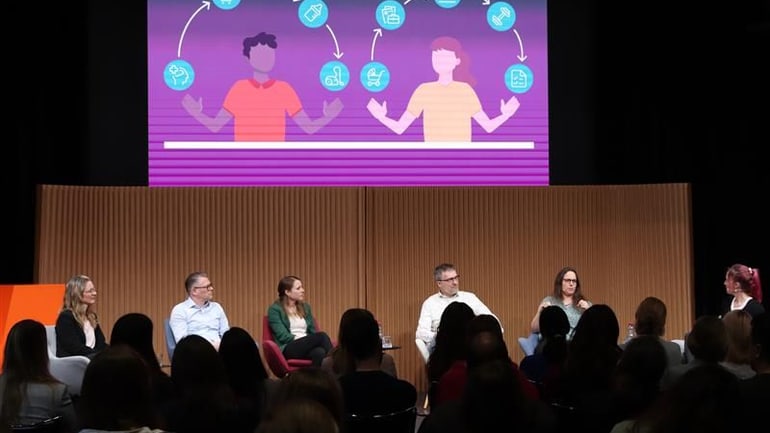
Missed the panel discussion?
Watch the recording via this link! (Language: German)
Guests
- Torsten Friedrich (CEO Denner)
- Christina Marschall (Site Manager Central-East Bernese Oberland, ELSA Group)
- Reto Kron (Senior HR Project Manager & former Head of HR GMLU)
- Monika Keller (Expert Change Management EIGER & Community Lead Working Parents)
- Katja Fischer de Santi (Head of Content Migros Group)
Moderation: Isabelle Hauser (Diversity, Equity & Inclusion Migros Group)
Mental Load: The invisible burden of everyday life
Mental load is an important topic in the context of compatibility. Mental load describes the invisible mental strain caused by the organization and coordination of everyday tasks. Migros not only wants to offer structural solutions within the framework of working models, but also raise awareness of this challenge. This should improve compatibility for everyone in the long term.
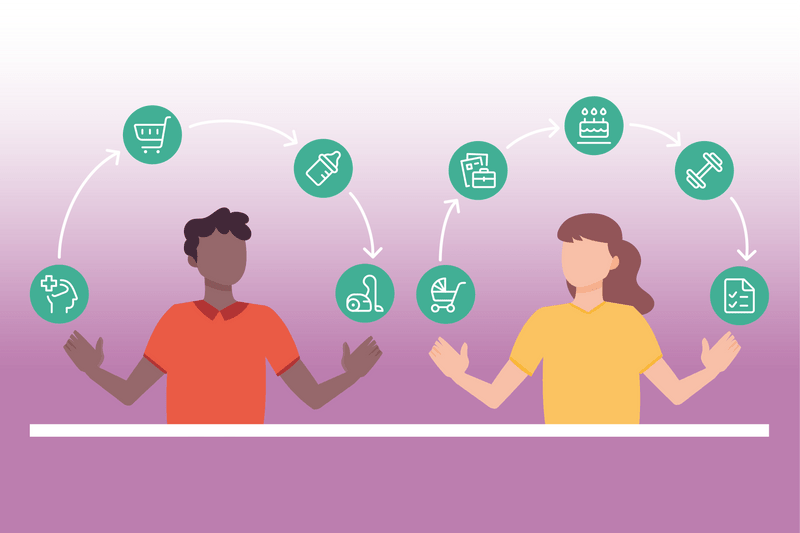
Mental load describes the invisible work associated with organization, planning and coordination in everyday life. Originally, the term was mainly discussed in connection with the organization of private life, where it often describes the mental stress of women and mothers. It is about the thought processes that are required to make everyday processes run smoothly. Figuratively speaking, these are all the balls that someone is juggling - to ensure that everyday life runs smoothly and nothing is forgotten, all balls must always be in the air.
On this page, we would like to expand the concept of mental load and transfer it to the world of work. Because there are also many invisible tasks in the professional context that can represent a considerable mental burden.
Examples:
- Private: planning shopping, organizing doctor's appointments, coordinating the family's needs.
- Working life: Monitoring deadlines, delegating tasks, resolving conflicts within the team, organizing birthday cards.
Mental load can affect anyone. Everywhere where someone organizes, coordinates or thinks emotionally. However, some groups are often more affected, for example single parents, parents with little support and especially mothers and women who take on more care work. If we talk openly about mental stress and mental load, we can better recognize who is burdened and distribute responsibility more fairly.
What are the consequences of mental load?
Health consequences
A certain amount of mental stress is completely normal and part of everyday life. It supports our ability to master challenges and is generally easy to deal with. However, excessive mental stress can impair our mental performance by limiting our concentration, working memory and problem-solving ability. This is also referred to as "mental overload".
Typical symptoms of mental overload are
- Permanent fatigue
- Irritability or emotional instability
- Inner restlessness and excessive demands
- Sleep problems
- Physical complaints, such as chronic pain or tension
Effects on the career
There is a one-sided distribution of mental load. A survey of 6,500 employees in 14 countries by the Boston Consulting Group found that women predominantly take on time-critical and frequent household tasks such as picking up children and putting them to bed or preparing meals - even when both partners work full-time. Men use the time gained for career advancement, recreation or further training. Women are less able to demand such career and health-promoting freedom.
Although the issue affects all genders, women are still often more affected, which can have both health and career-hindering consequences.
Digression: A few facts from Swiss households
- In almost 70% of couples with children, the housework is mainly done by the woman. Only in 5% is the man mainly responsible.
- Typically, women take on tasks such as cleaning, cooking and organizing gifts and presents for friends and relatives.
- Around one sixth of women and one tenth of men with children under 25 in the household feel overworked most or all of the time.
What tips help when dealing with mental load?
Interested? Deepen your knowledge on mental load!
- In this guide you will find even more tips and information on dealing with mental load.
- As a manager, you yourself are a role model and can have a positive influence on the health of your employees. Discover tips and information for managers in the information sheet.
- Factsheet on Mental Load
- iMpuls - Mental Load: What to do? 6 tips for less stress
Let's make the invisible work visible together. Share our tips with your colleagues and friends and start talking about Mental Load!
Further resources
Caring for Relatives
Often quietly in the background – on top of the day-to-day work
Caring for relatives can place an additional and often demanding burden on staff. It involves significant personal, emotional and organisational demands.
With its new ‘Caring for Relatives’ programme, the Migros Club School provides targeted support to people in this situation. These practical online modules raise awareness and provide skills in the following areas:
- Understanding and supporting people with dementia
- Recognising role changes and boundaries
- Self-care and coping with stress
The aim is to feel more secure in everyday life, whilst not losing sight of one’s own health.
A free introductory webinar provides an initial overview and easy access.
The service is available in German, French and Italian.
Please note: Many Migros companies cover the course fees or reimburse part of them. For further information, please contact your employer.


Strengthen your health and well-being
The Migros Club School offers you a wide range of activities to invigorate your senses: enjoy culinary experiences in our cooking courses, find inner peace and self-confidence through relaxation and stress management or get in shape with invigorating sports and fitness courses. Discover the flexible health subscriptions that allow you to train in line with your everyday life.
Many Migros companies cover the course costs or partially reimburse them. For more information, please contact your employer.
Health partners
Find more offers from the Migros Group linked below: